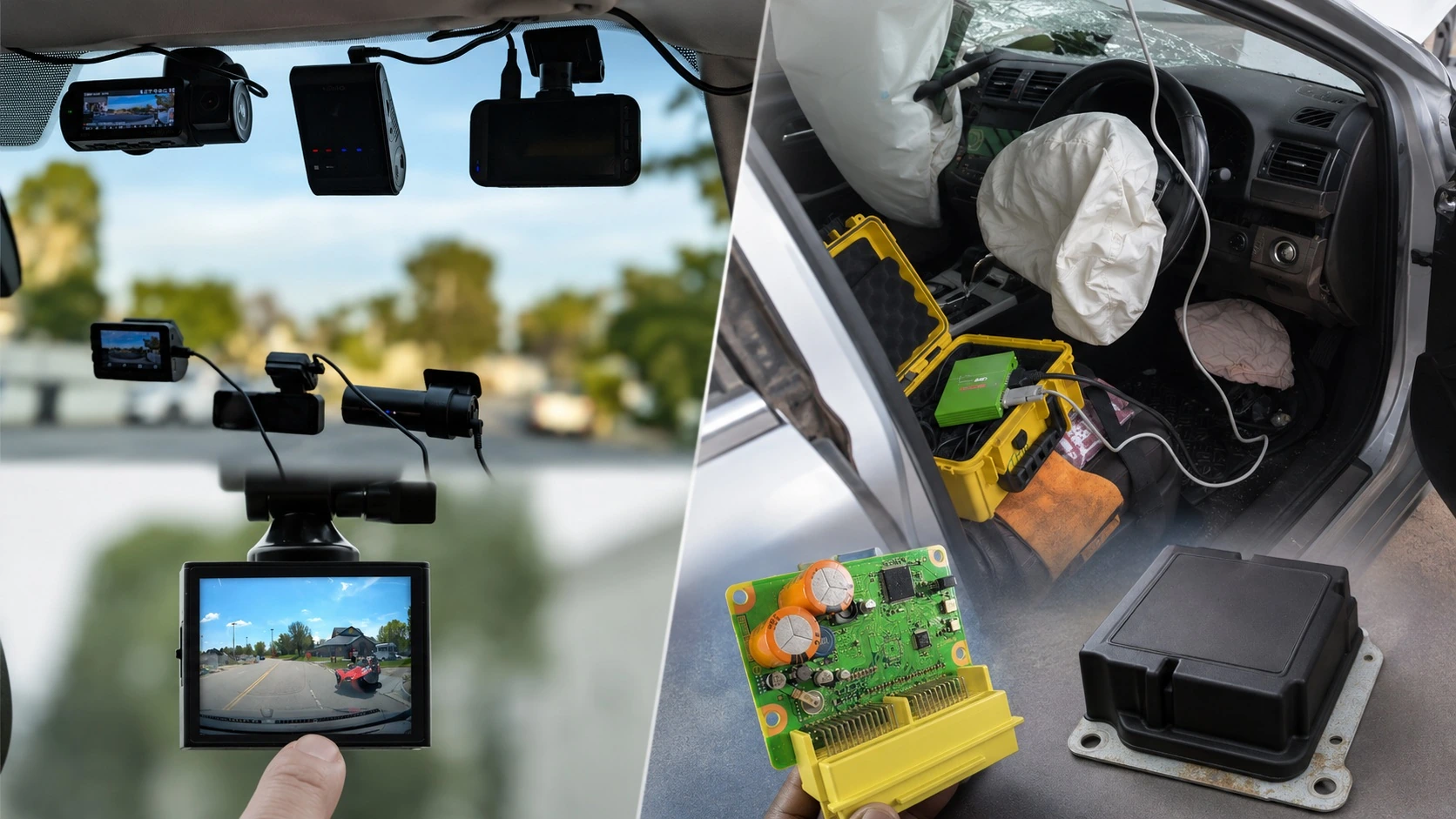
Why Your Dashcam Might Fail You in a Crash — and Where EDR Steps In

Dashcam Might Fail You in a Crash

EDR Vs DashCamera

📊 EDR vs. Dashcam: What Tells the Real Story in a Crash?
Your dashcam captures moments. Your EDR captures the mechanics behind them.

Your dashcam shows what happened. Your EDR shows why it happened.

📉 Dashcams Don’t Always Tell the Full Story

  • Can be knocked out of place during a crash or even while swerving/braking
  • May lose power during impact
  • Footage may be obstructed by debris or a cracked windshield
  • Most only record front-facing footage — missing side/rear impacts
  • No insight into vehicle behavior or interior movement

🔍 Enter the Event Data Recorder (EDR) — The Black Box of Truth

EDR data tells the full story by recording:

  • Vehicle speed before, during, and after the crash
  • Delta-V (change in speed) and crash severity
  • Seatbelt usage for each occupant
  • Brake and gas pedal positions
  • Steering input and angle
  • Occupant weight classification
  • Airbag deployment
  • Rollover motion detection
  • Crash direction: frontal, side, or rear

🎥 Dashcam = Partial View     📊 EDR = Complete Story

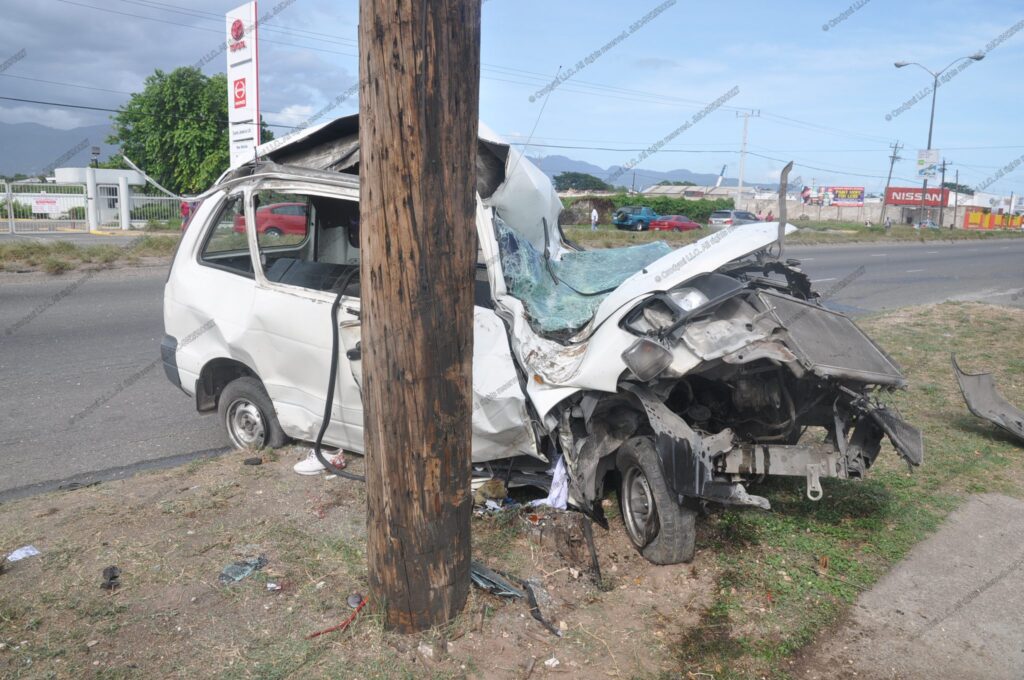
In high-impact crashes — especially rollovers or vehicle spinouts — occupants can be displaced inside the cabin. Dashcams won’t reveal these internal dynamics. EDR helps investigators determine who was seated where, driver behavior, and whether evasive action was taken.

Even with just a front camera, your EDR covers the angles you don’t see — including side and rear impact data that can change the course of a legal case or insurance decision.

🛡️ Crodymi LLC Uses EDR to Reveal the Truth

  • Support for legal investigations and court cases
  • Reliable evidence for insurance and crash analysis
  • Scientific insight into vehicle behavior

Dashcam footage is helpful. EDR data is powerful.

Don’t rely on half the story — let us uncover the whole truth.


🔎 Get Expert Help Now

📚 Frequently Asked Questions

Answers to common questions about Event Data Recorders (EDRs) and Dashboard Cameras.

1. What is an Event Data Recorder (EDR)?

An EDR is a factory-installed electronic device that records vehicle time in seconds, speed, brakes, ABS and traction control activities, steering inputs, throttle, airbag deployment, and more during a crash. It provides secure, objective evidence used for crash reconstructions and in court.

2. What is a Dashboard Camera (Dash Cam)?

A dash cam is a video recorder mounted on the windshield or dash. It captures visual footage used for insurance, disputes, and personal protection.

3. How are EDRs and Dash Cams different?

EDRs capture technical data automatically and securely; dash cams provide video but can be lost or tampered with. EDRs are for accuracy; dash cams add context.

4. Where are these devices typically located?

EDRs are inside the airbag control module under the dash or seat. This device is bolted to the metallic frame of a vehicle in a secure location. Dash cams mount on windshields (front/rear), bumpers, or in the cabin.

5. Who can install or access these devices?

EDR access requires a trained investigator. Dash cams can be installed or accessed by vehicle owners or mechanics.

6. How accurate is speed or delta-V data from each device?

EDRs are calibrated and highly accurate; dash cams may estimate speed using GPS or video, but accuracy depends on installation and calibration.

7. What’s the price to have each installed and analyzed?

EDR: $0 to install (factory) — $350–$850+ for retrieval/report.
Dash Cam: $80–$500 to install; $0–$100 to analyze footage.

8. What are commonly used terms you should know?

EDR, CDR, Direct-to-Module Download (D2M), Diagnostic Port Download, data link connector (DLC), OBD-II port ,Table-top Download, HDMI cable,USB/SD Cards/Wi-Fi/Bluetooth transfers.

9. Can dash-cam footage be stolen or lost in a crash?

Yes. Dash cams are exposed and may be damaged, edited or stolen. EDRs are built-in and survive most crashes, fires, and water. EDR data cannot be changed or altered.

10. Is one better than the other for court or insurance use?

EDR data is preferred for technical accuracy and security; dash cams are valuable for visuals and context.

11. What camera types are common in modern vehicles?

Front/rear dash cams, blind-spot (side) cameras, 360° cameras, bumper cams, cabin cams, driver-monitoring cams.

12. Why is EDR data important after a crash?

EDR data can clarify the full crash sequence, vehicle actions, and mechanical responses for legal, insurance, and safety investigations. In addition to recording objective crash metrics, modern Event Data Recorders (EDRs) provide a comments section that allows certified crash investigators to document key observations—such as tire size and type, condition of seat belts and suspension, airbag deployment, damage locations, tread depth, and other vital information. These expert notations ensure that the raw data is accompanied by professional context and any critical findings observed during the download or imaging process.


Enter Your Details to Receive FAQs & EDR Summary


⏳ Sending…
✅ Submitted! Check your inbox.
❌ Submission failed. Try again.

Crodymi